What decides whether a charging car works
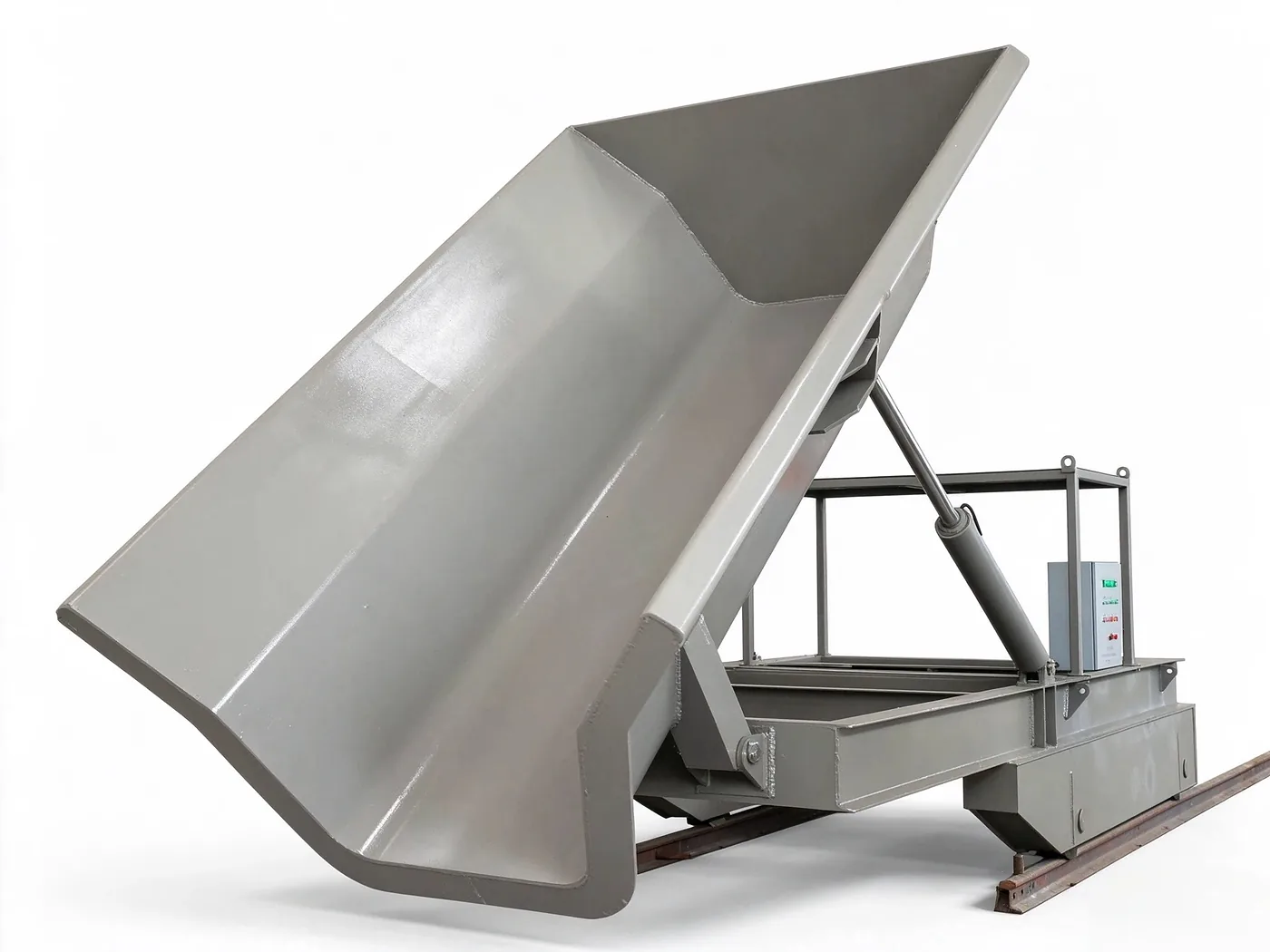
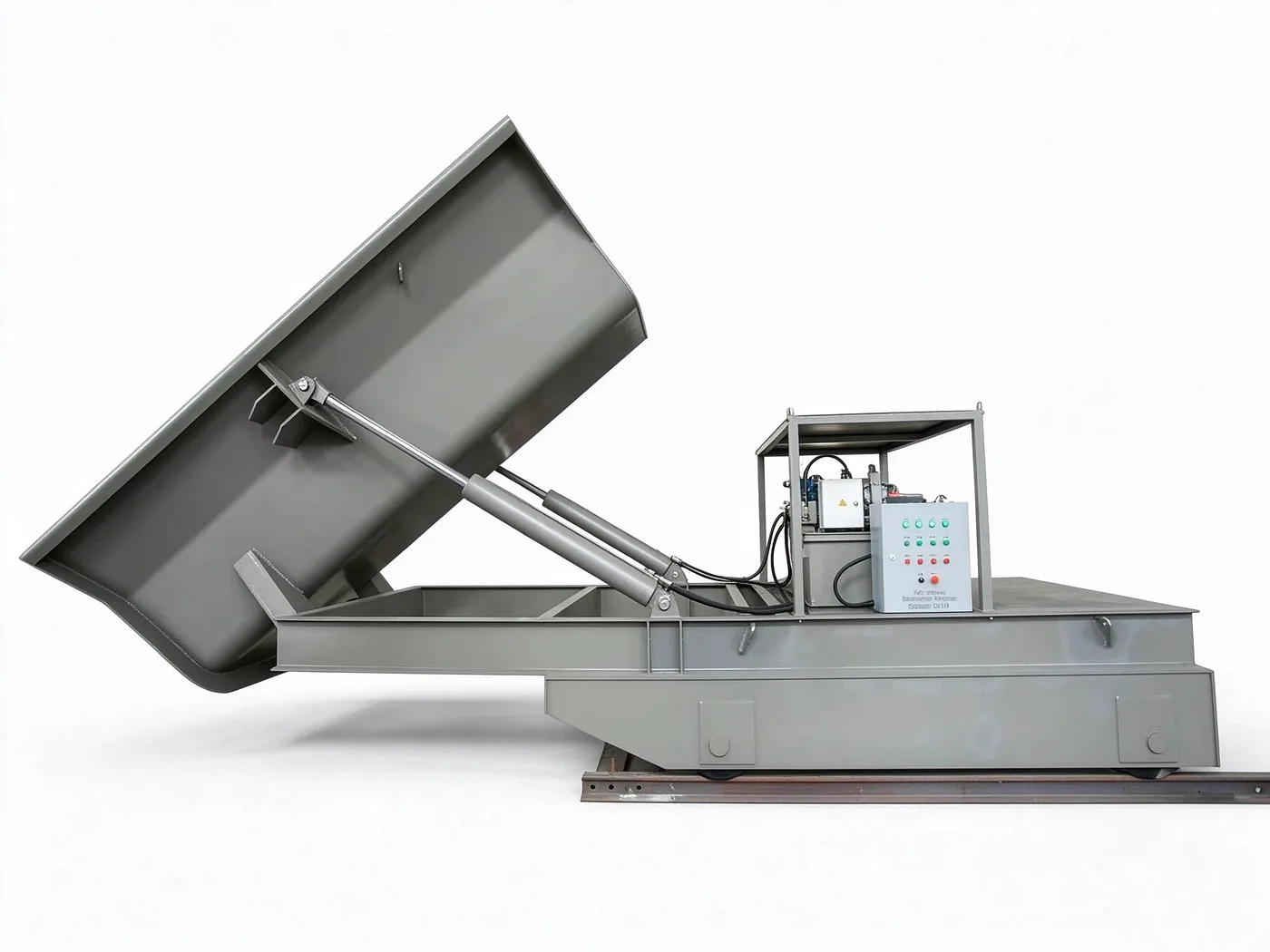
A charging car is a rail vehicle, a tipping box and a hydraulic power pack that must arrive at the furnace door at the right height, stop at the right point, and return empty without dragging scrap. The three dimensions that decide it are the rail gauge, the door sill height and the travel length. Everything else follows.
We build to those dimensions. A car that sits even slightly too tall for the sill, or too wide for the bay, cannot be corrected with a wrench on site.
We build 2 versions: 1 ram on a compact frame, or 2 rams on a wider frame with a balanced return. Each car ships with 1 hydraulic power pack, 1 local control panel and 1 set of rail clamps.
Single or double cylinder
| Version | Best for | What changes |
|---|---|---|
| Single cylinder | Compact bay, shorter box, one-stroke tip | One ram, lighter frame, simpler hydraulic circuit |
| Double cylinder | Longer box, heavier scrap charge, controlled return | Two rams, wider frame, balanced tipping and slower return |
Both versions share the same rail frame, wheel set, local control and safety interlock. The choice is made from the box size and the door geometry, not from a preference for more cylinders.
The parts that are easy to get wrong
- Door sill height. The box hinge line must clear the sill at the start of the tip, or the box will jam against the door frame.
- Rail gauge and profile. The wheel set must match the rail head, not just the gauge. A car built for a flat-bottom rail will not sit correctly on a grooved rail.
- Operator position. The pendant lead and the panel guard are placed so the operator can see the door and stand clear of the tip path.
- Travel limit. A mechanical stop and a limit switch prevent over-travel into the furnace area.
- Hydraulic routing. Hoses are capped, labelled and matched to the schematic before packing, so reconnection on site is by number.
What to send for a first drawing
- Rail gauge, rail profile and available travel length.
- Furnace door width, sill height and the distance from the rail to the door.
- Scrap box size you intend to use, or the charge weight per heat.
- Supply voltage, control voltage and the operator position.
- Site constraints: overhead clearance, adjacent equipment and the crane approach.
We reply with a general arrangement, a hydraulic schematic outline, the scope split and the document list. If the rail profile is unknown, we ask for a photograph of the rail head before we fix the wheel set.
Related reading: steelmaking auxiliary equipment range, ladle and lifting bail, furnace manipulator, and shipping steel plant equipment in knock-down condition.