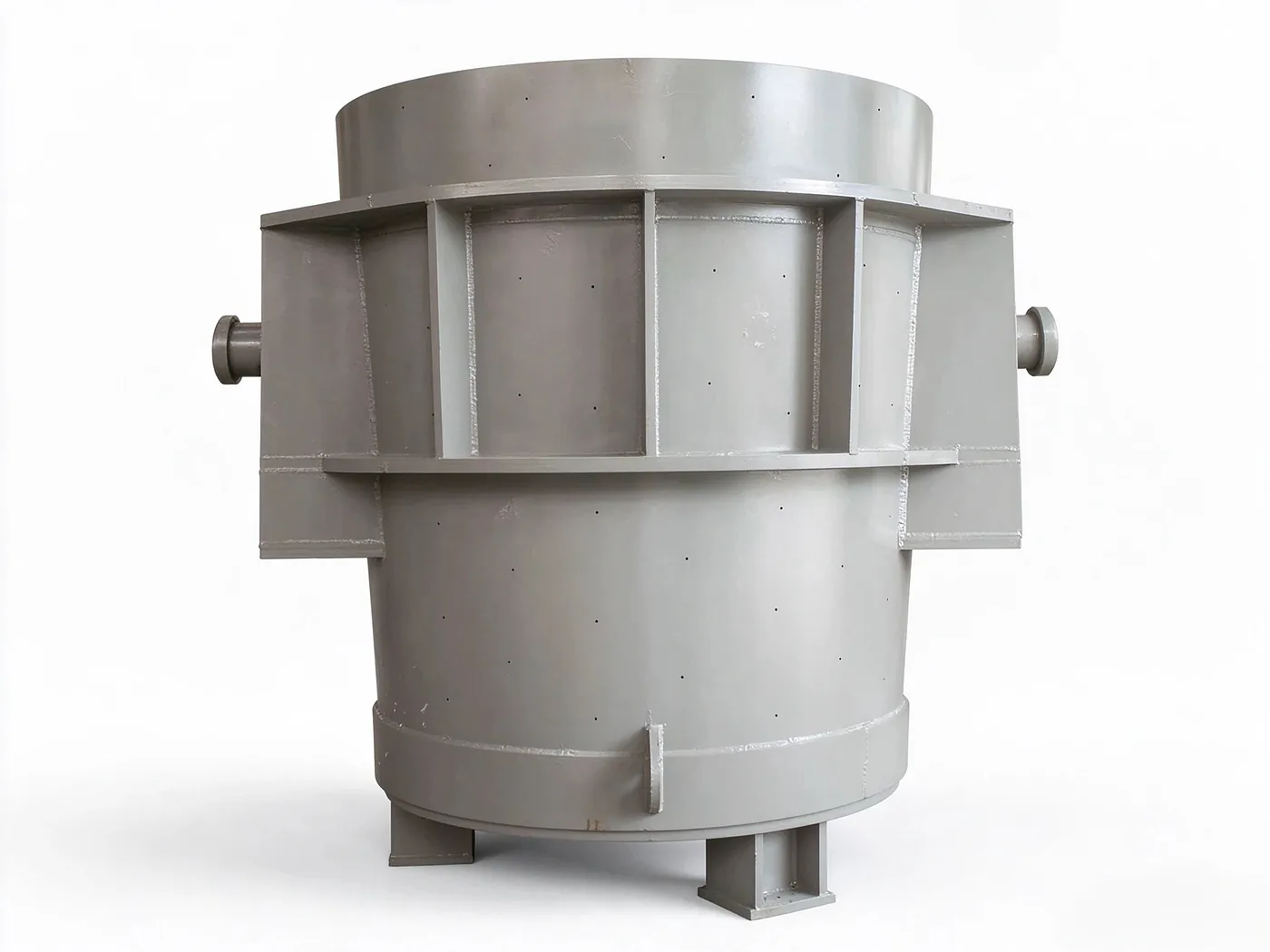
What the bail actually does
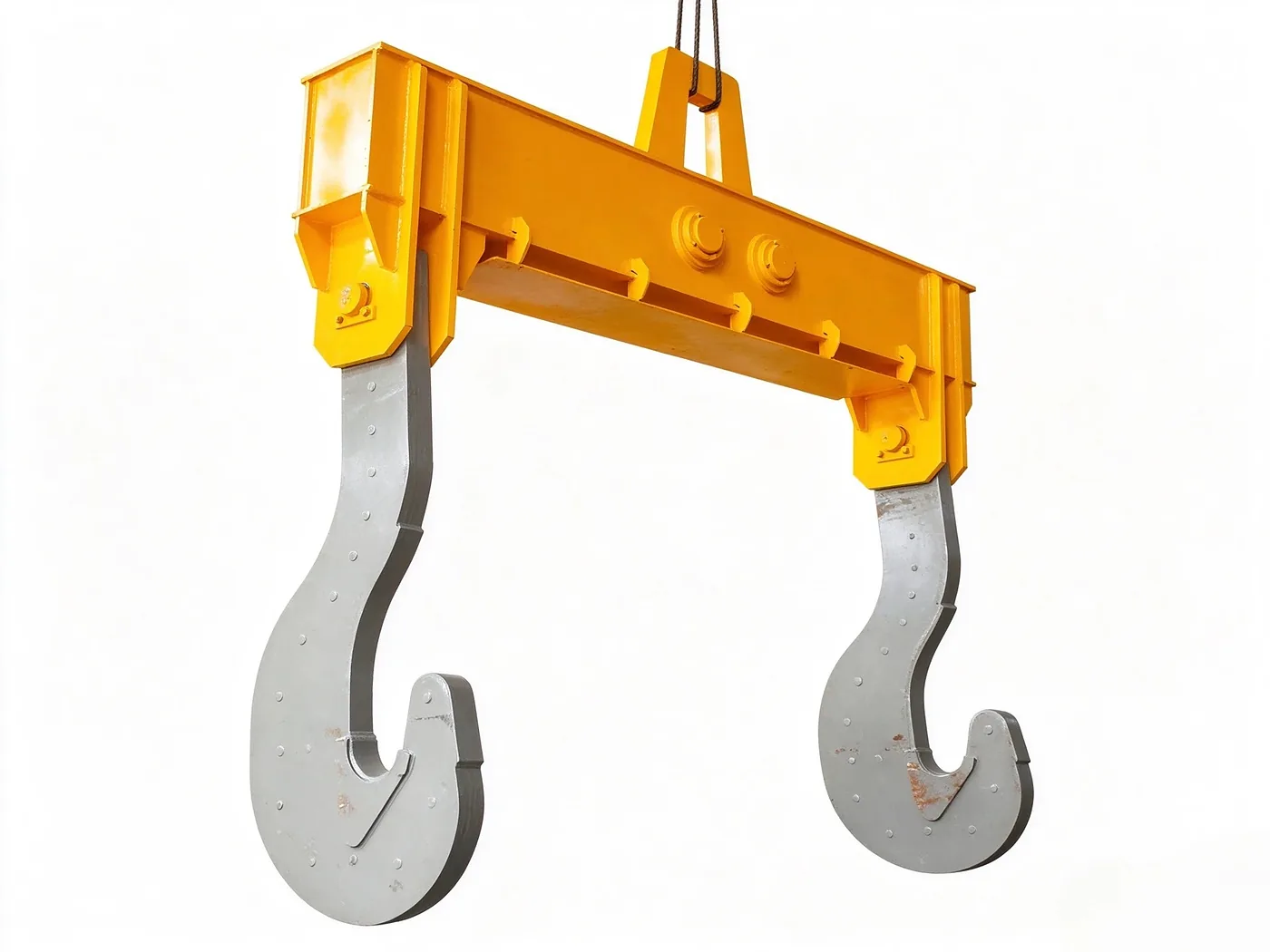
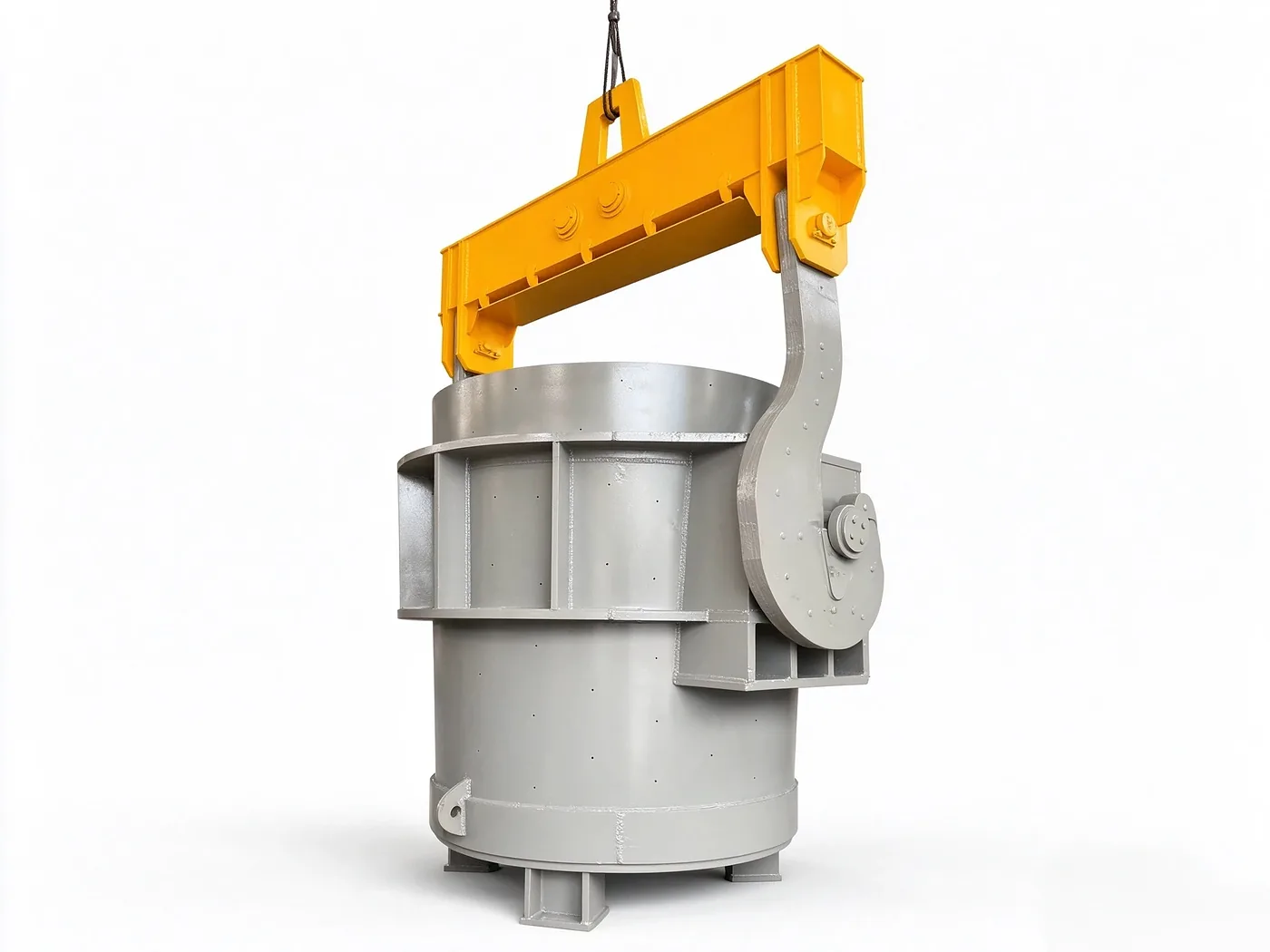
A ladle bail is a load path, not an accessory. It takes the full weight of the shell and the melt, transfers it through two hooks into the crane hook, and keeps the ladle level while it travels. If the hook gauge is wrong, the crane picks up on the hook tips. If the bail span is wrong, the shell swings. Neither problem can be fixed at the steelworks with a hammer.
We build the bail around three measured dimensions: the crane hook gauge, the bail span at the trunnion centres, and the trunnion journal diameter. Everything else — beam depth, plate thickness, hook saddle — follows from those.
Matched set or replacement bail
| Configuration | What we supply | What you provide |
|---|---|---|
| Matched set | Bail, shell, trunnions, pouring lip, match marks | Hook gauge, required pouring height, shop layout |
| Bail only | Bail beam, hooks, saddles, match marks to your shell | Trunnion centres and journal diameter of the existing shell |
| Shell only | Shell, trunnion journals, pouring lip | Existing bail dimensions and hook gauge |
If the unit is already in service, we ask for photographs with a tape measure in the same frame. It is a fast way to catch a non-standard hook or a repaired trunnion before the drawing is issued.
The load path, checked before shipment
The bail and shell are mated in our workshop. The check is simple and physical:
- Fit the bail to the trunnion journals and confirm full saddle contact.
- Measure the hook height with the shell level, and confirm the pouring lip clearance at the tilt angle you use.
- Confirm the match marks on bail and shell, so the same pair is refitted on site.
- Record the result and pack the bail and shell separately, with the record in the document set.
We do not publish a load rating for a bail we have not measured. The rating follows the data you give us, and it is stated on the drawing.
What to send for a first drawing
- Crane hook gauge and the maximum hook height.
- Bail span and trunnion centres of the existing unit, or the required pouring height for a new one.
- Shell diameter, height and pouring lip position.
- Duty: metal temperature, number of pours per shift, and whether the ladle is preheated.
- Site constraints: crane approach, ladle car height, and the space available for the bail when parked.
Send these and we will return a general arrangement, a scope split and the interface list. If one dimension is missing, we say so instead of filling it with a nominal value.
Related reading: steelmaking auxiliary equipment range, rail-mounted charging car, furnace manipulator, and shipping steel plant equipment in knock-down condition.