Furnace Manipulator and Scrap Pusher
PRODUCT Steelmaking Equipment

Furnace Manipulator and Scrap Pusher

Door work is the most exposed job in a melting shop. We supply single-arm and three-station manipulators that rake, stoke and push scrap at the furnace door, with the hydraulic power pack set back from the heat and the tool head matched to your door opening.

  • Type
    Single arm or three-station
  • Basis
    Door opening, sill height, reach
  • Drive
    Hydraulic power pack, pendant control
  • Shipping
    Beam, columns and power pack separated

Custom-engineered. Final specifications are fixed after process data review and site assessment.

02 Engineering

How it is built

  • 01

    Welded beam and columns with machined pivot pins, sized to the door opening and the reach you need.

  • 02

    Single-arm version for one furnace door; three-station version where three working positions share a beam.

  • 03

    Hydraulic rams with cushioned end strokes, so the tool stops without shock at the door.

  • 04

    Tool head changed by pin and wedge: rake, pusher or scraper, matched to the door and the charge.

  • 05

    Power pack and control panel set back from the radiant heat, with a pendant for the operator.

  • 06

    Guards over the ram and hose runs, and a mechanical stop at the door approach.

03 Shop floor detail

Built, assembled and inspected

Photographs from our own workshop and from installed projects. Details are shown as reference; final arrangement follows the approved drawing.

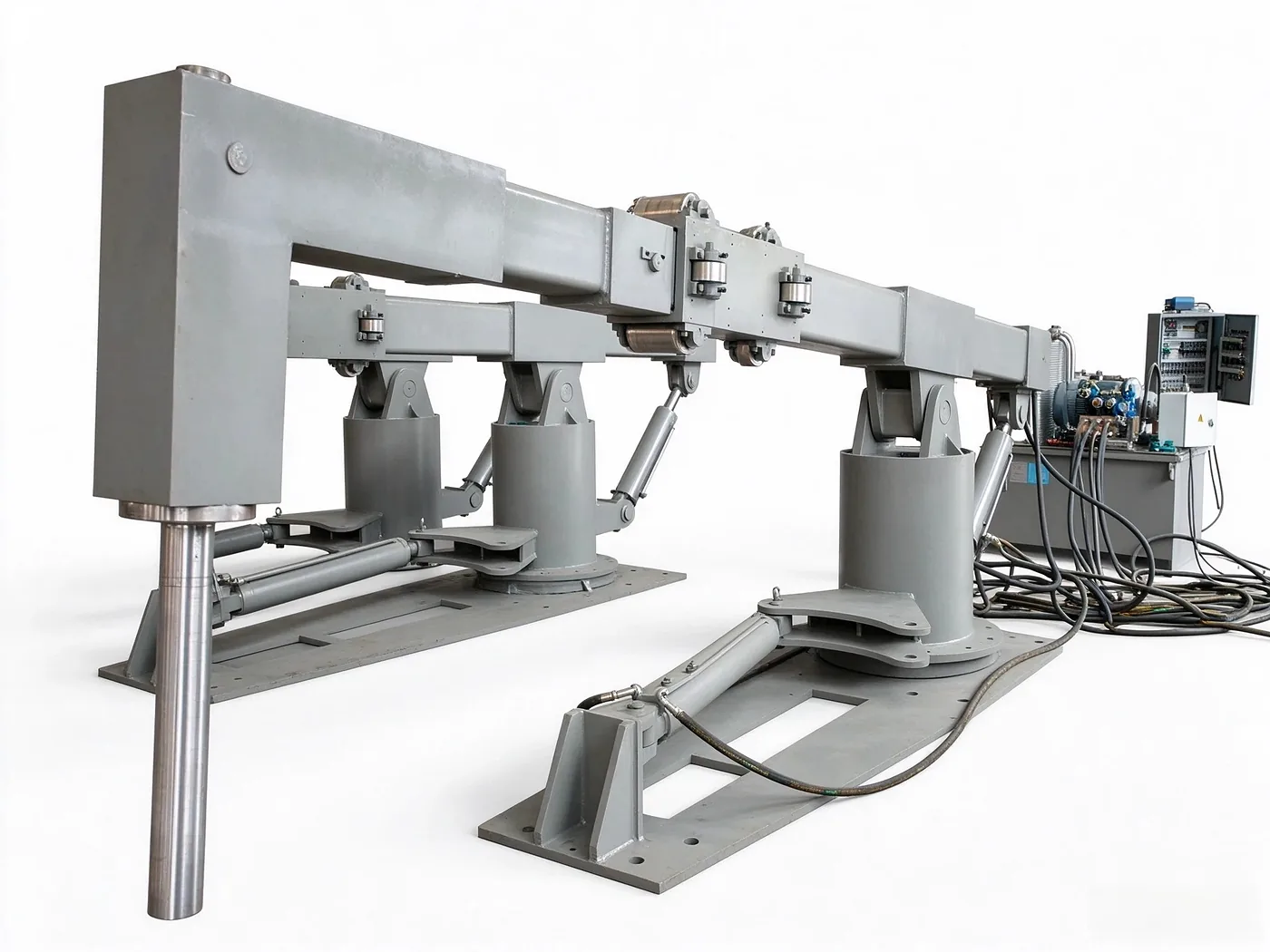
Three-station furnace manipulator with common beam and hydraulic power pack

Fig. 01 · Three-station manipulator

Where Our workshop, Wuxi

What Common beam, three working positions, one power pack and panel.

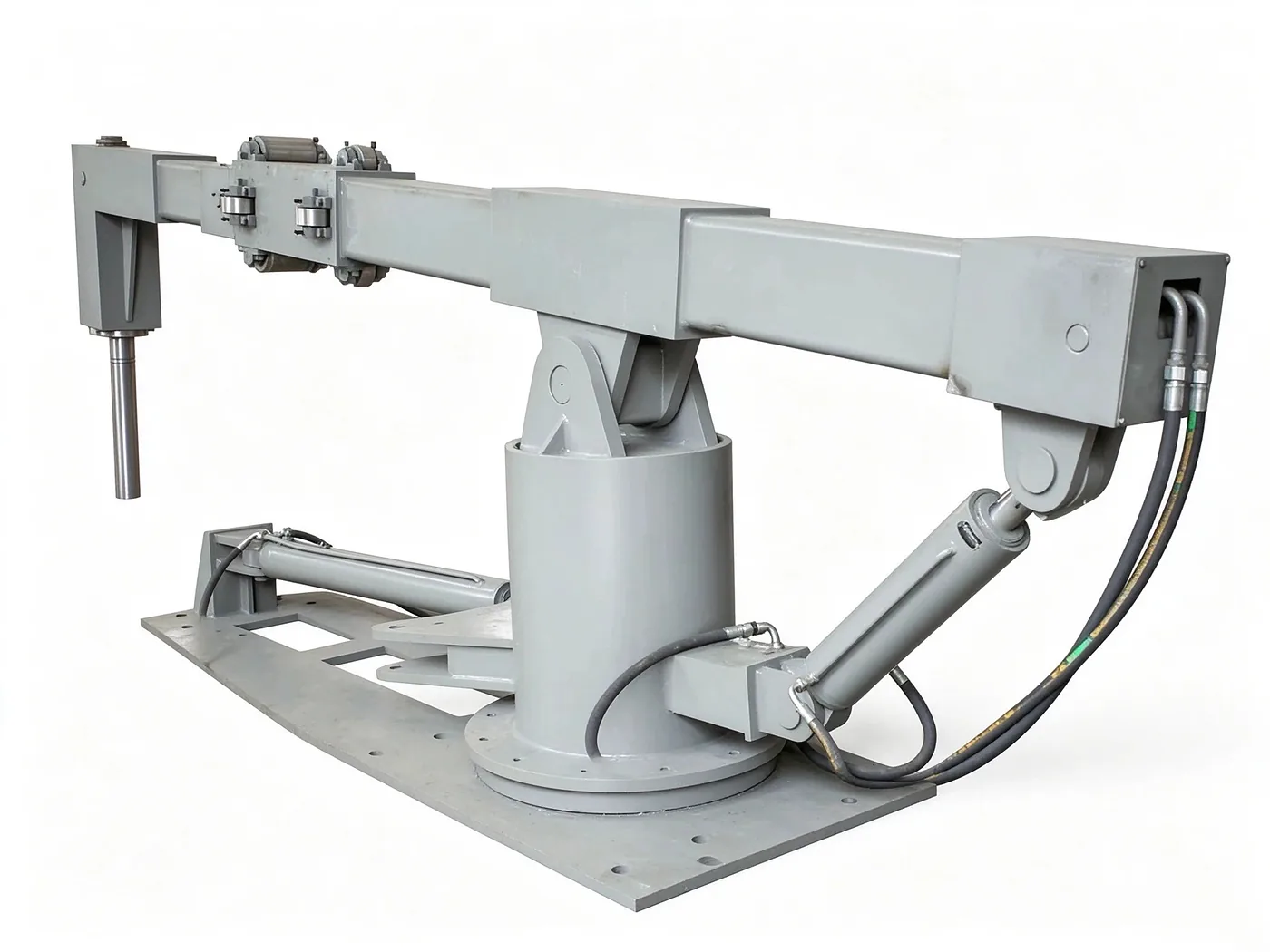
Single-arm furnace manipulator

Fig. 02 · Single-arm manipulator

Where Our workshop, Wuxi

What One working position, with the ram and tool head at the door approach.

04 Specification

Application and selection notes

What the manipulator is for

A furnace manipulator keeps the operator away from the door while the tool does the work: raking the charge, pushing scrap into the melt, clearing a blocked door, or pulling slag away from the sill. Three things judge the machine — reach at the door, control at the tool, and how long the hydraulic system survives the heat.

We build the beam and columns to the door opening and the reach you need, then set the power pack back from the radiant heat. The tool head is a wear item, so we pin and wedge it rather than weld it.

Single arm or three-station

VersionWorking positionsBest for
Single armOne door, one toolA single induction furnace or a refining station with one working point
Three-stationThree doors or three tools on one beamAdjacent furnaces sharing a bay, where floor space and power packs should not be duplicated

The three-station unit is not three machines bolted together. It is one beam, one hydraulic circuit and one control philosophy, with each station able to work independently. That is why we measure the layout and the door spacing before we cut the beam.

Tool heads and door interface

  • Rake. For pulling scrap and slag away from the sill.
  • Pusher. For pushing a light charge into the melt without dropping it short.
  • Scraper. For clearing a blocked door or a buildup at the sill.

We match the head to the door width and the sill height. A head that is too wide cannot enter the door; one that is too narrow leaves the corners uncleared. We fix the geometry from your door drawing, and we list the alternative heads so a later change does not need a new machine.

We build it in 2 layouts: a 1-station unit for a single door, and a 3-station beam for adjacent doors. Each beam carries 1 power pack and up to 3 tool heads — rake, pusher and scraper — so the same machine handles the whole door.

What we need before quoting

Send the door width and sill height in millimetres, the reach from the beam centre, the ambient temperature at the door, and whether you need 1 station or 3. We return a drawing with the rating on it, not a catalogue number.

Safety and heat

The operator stands at a pendant, not at the beam. The rams have cushioned end strokes, and a mechanical stop limits the approach to the door. Guards cover the ram and the hose runs. We set the power pack back and shield it; we fix the setback from the door position, not from a catalogue distance.

We do not publish a reach or a force rating for a manipulator before the door geometry is confirmed. The drawing states the rating, against the data you provide.

What to send for a first drawing

  • Door width, sill height and the distance from the operating floor to the door.
  • Number of working positions and the spacing between doors.
  • Tool heads required, and the work each one must do.
  • Hydraulic supply: power pack position, supply voltage and control voltage.
  • Site constraints: overhead clearance, adjacent equipment and the operator position.

Send these and we will return a general arrangement, the tool-head list and the scope split. If the door drawing is not available, a photograph with a tape measure across the opening is enough to start.

Related reading: steelmaking auxiliary equipment range, rail-mounted charging car, ladle and lifting bail, and Anhui foundry fume project.
05 Buyer questions

Questions buyers ask

What is the difference between a single-arm and a three-station manipulator?

A single-arm unit serves one working position: one door, one tool, one operator. A three-station unit shares a common beam across three positions, so three tools can work independently at adjacent doors. The three-station version saves floor space and uses one power pack, but it needs a longer beam and a layout that keeps each tool clear of the others.

Can the tool head be changed for different jobs?

Yes. We pin and wedge the tool head, so a rake, pusher or scraper can be swapped at the door. We supply the head that matches the work you describe, and we list the alternative heads in the drawing so you can order them later without a new design.

How do you protect the power pack from furnace heat?

The power pack is set back from the beam and shielded by a guard, with the hose runs protected against radiant heat. The exact setback depends on the door position and the shop layout, so we fix it from your site drawing rather than a standard distance.

Do you supply the hydraulic schematic and commissioning checklist?

Yes. The document set includes the general arrangement, hydraulic schematic, electrical outline, tool-head list, commissioning checklist and a spare-parts list. We support the first heat remotely and can attend on site under a separate service scope.

06 Where it runs

Applications

  • Induction furnace door work
  • LF refining stations
  • Foundry scrap pushing
  • Slag and door clearing
08 / NEXT STEP

Ready to spec this equipment?

Send your process data, duty cycle and site constraints. Our engineers reply within 24 hours with a preliminary proposal and a document list for your side.