What was installed
Reviewed by Xiesheng engineering
Updated 2026-11-25
Three furnaces, three different fumes
A special steel foundry rarely runs one furnace. This melting shop runs induction furnaces for melt, a VOD unit for vacuum refining, and an LF station for ladle refining. Each station releases fume at a different moment, at a different height, with a different dust load. Treating them as three separate problems usually means three small units, three control philosophies and three maintenance routines.
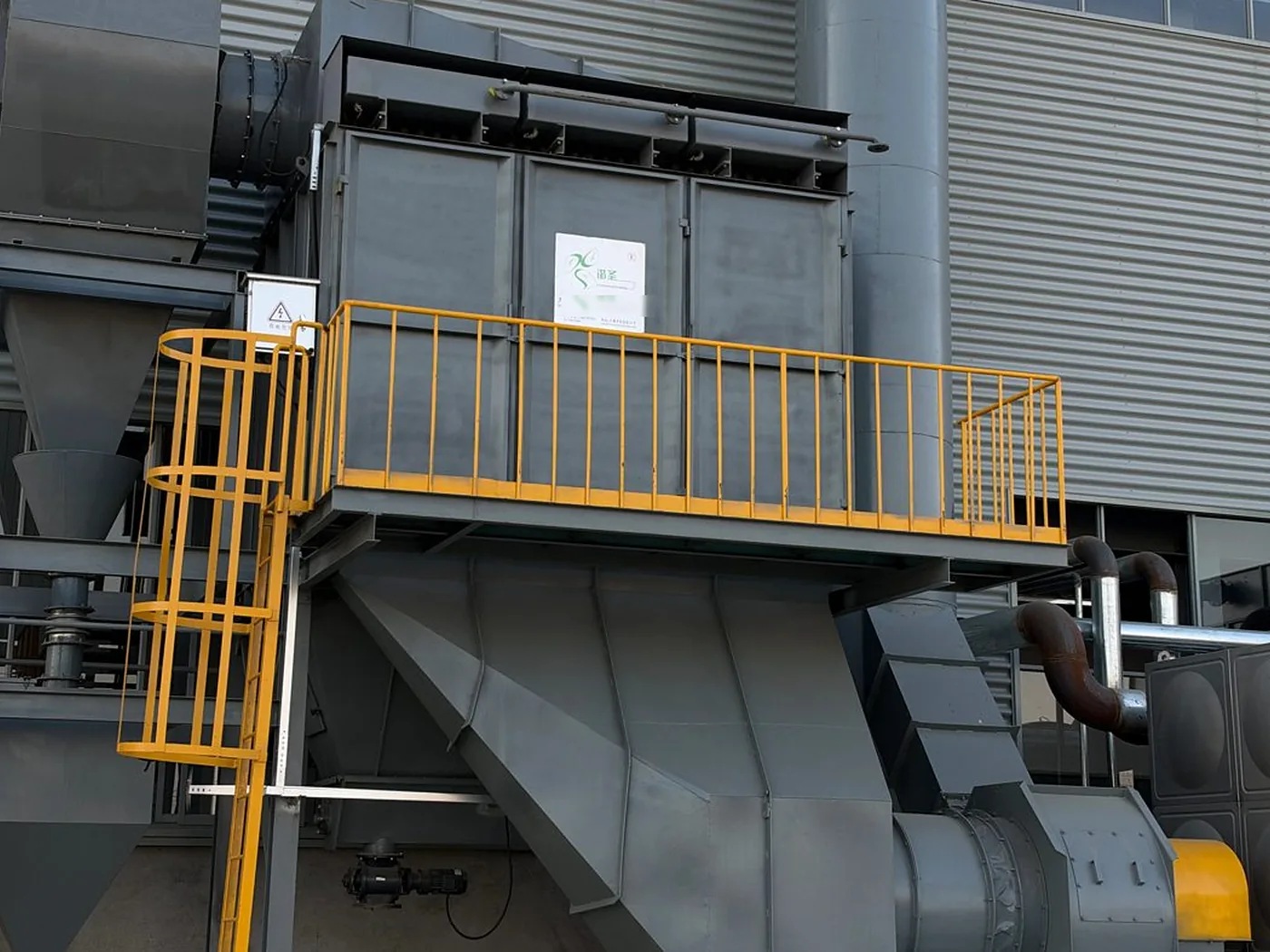
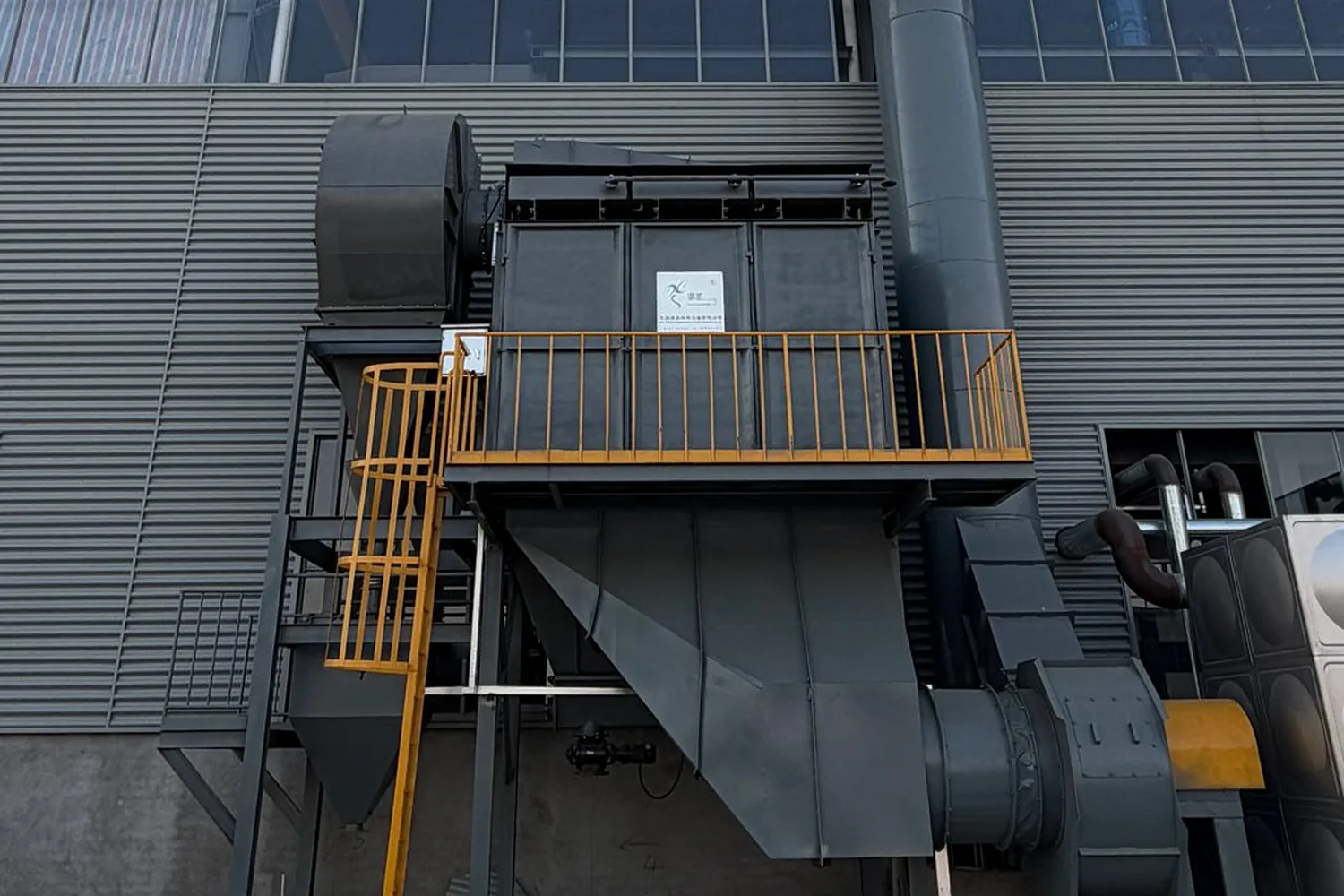
Fume from the three stations travels through ducting to a single pulse-jet baghouse. One fan, one cleaning sequence, one spare-parts list.
Scope: what we supplied
Our supply stopped at defined interfaces, so the owner’s team knew exactly what to erect and what to connect.
| Scope item | What it includes | Interface on site |
|---|---|---|
| Baghouse body | Segmented shell, hopper modules, access doors, walkway | Bolted to support steel, sealed at flanges |
| Pulse cleaning | Air header, pulse valves, venturi and filter cages | Plant air supply, differential-pressure signal |
| Dampers and actuators | Damper blade assembly, electric actuator, flanged frame | Duct flange, 380 V supply, control signal |
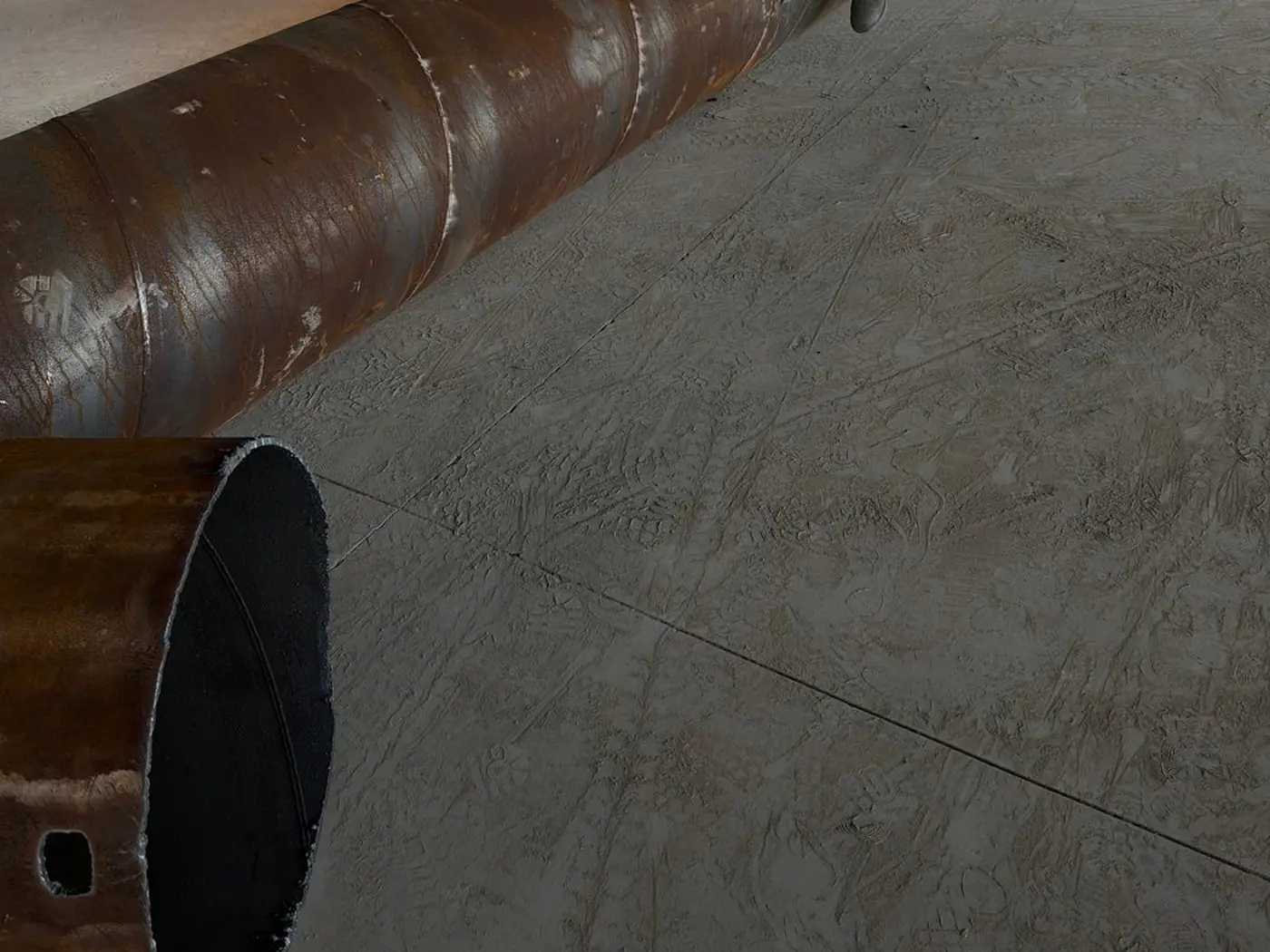
| Ducting | Main duct runs, bends, circumferential welds | Capture hoods, baghouse inlet |
| Support steel and access | Platform, handrail, ladder, hopper support | Foundation anchor points |
Control cabinet and fan ancillaries went into the project schedule, but this photo set does not document them. We do not publish photographs of equipment we did not manufacture.
How the system works
- Capture. Hoods at the induction furnaces, the VOD station and the LF station draw fume into the duct run. We fix hood shape and suction distance from the capture point, not from the baghouse size.
- Convey. The duct carries dust-laden air to the baghouse inlet. The site team welds large-diameter runs in place and supports them independently of the shell.
- Filter. Air passes through filter bags; dust collects on the outside of the media. Media selection follows dust chemistry and gas temperature — polyester, PTFE membrane or aramid, depending on the duty.
- Clean online. A differential-pressure signal triggers pulse cleaning while the unit stays online. There is no shutdown window for cleaning, which matters when the shop runs continuously.
- Discharge. Dust falls into a 45–60° hopper; a rotary airlock or slide gate removes it. We set the angle so material does not bridge at the cone.
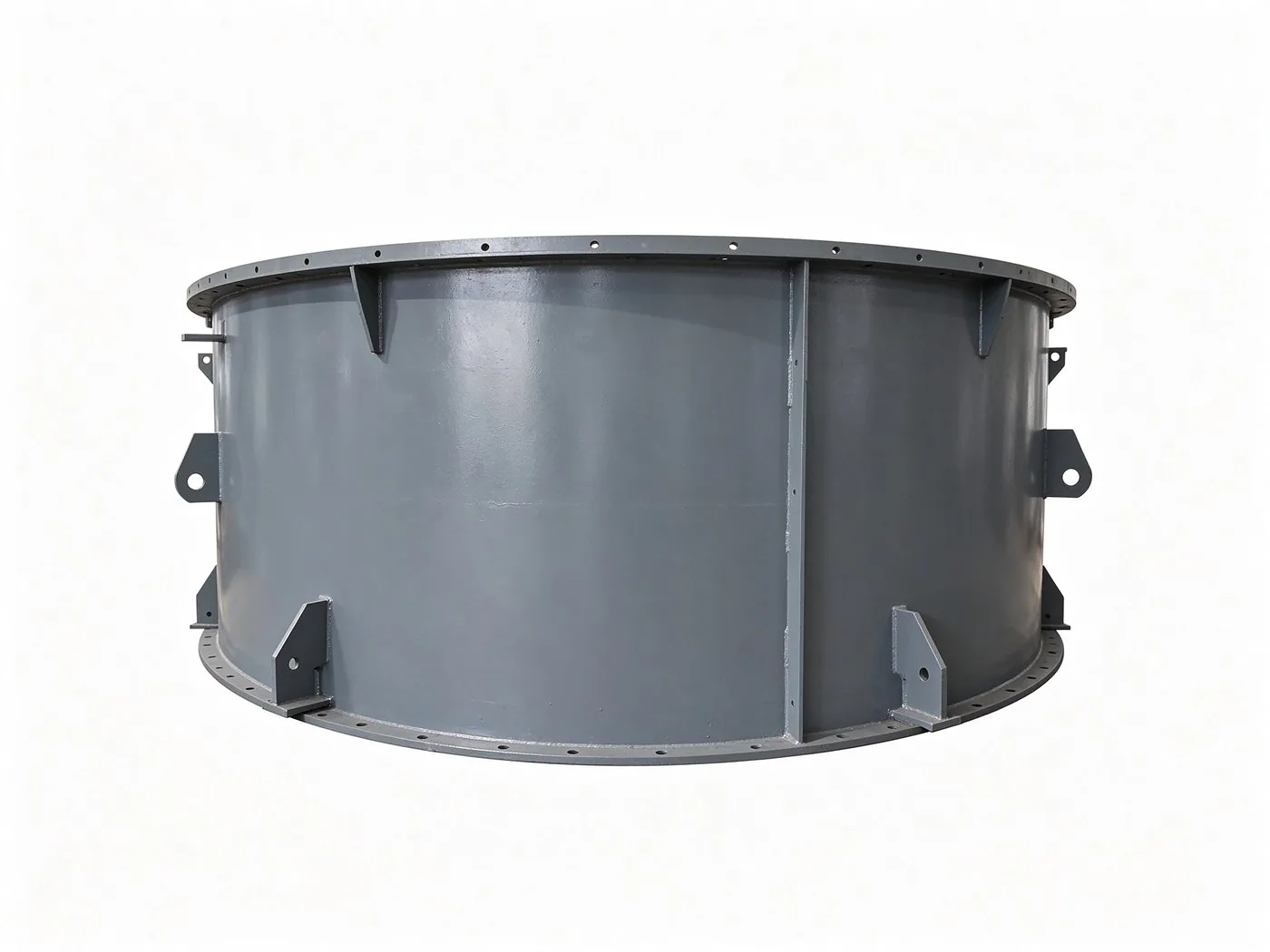
Shell segment at our workshop: flanges, stiffeners and lifting lugs are part of the shipped module.
Why the housing arrives in segments
A baghouse for a melting shop is wider than a standard truck. Instead of shipping a completed shell, we break the unit into transport modules: shell rings, hopper sections, inlet transition, access doors and platform pieces. The workshop trial-fits and marks each module; the site team bolts them together with gaskets at the flanges.
This is not a cost shortcut. It changes what the site team needs: a crane plan, a bolt and gasket list, a defined erection sequence, and a torque check at each joint. Once the site team prepares those four items, a segmented shell goes up faster than a welded one — and the buyer can inspect it from the inside before the roof goes on.
The full sequence is in how we assemble a modular baghouse on site.
As-built details visible in the photo set
The front face carries 3 access doors, each with a swing hinge and a gasket seat. Every shell ring has 4 lifting lugs, so the crane can pick a ring without slinging through the flange. The hopper runs at 45–60°, and the unit is specified for 24/7 duty with online cleaning.
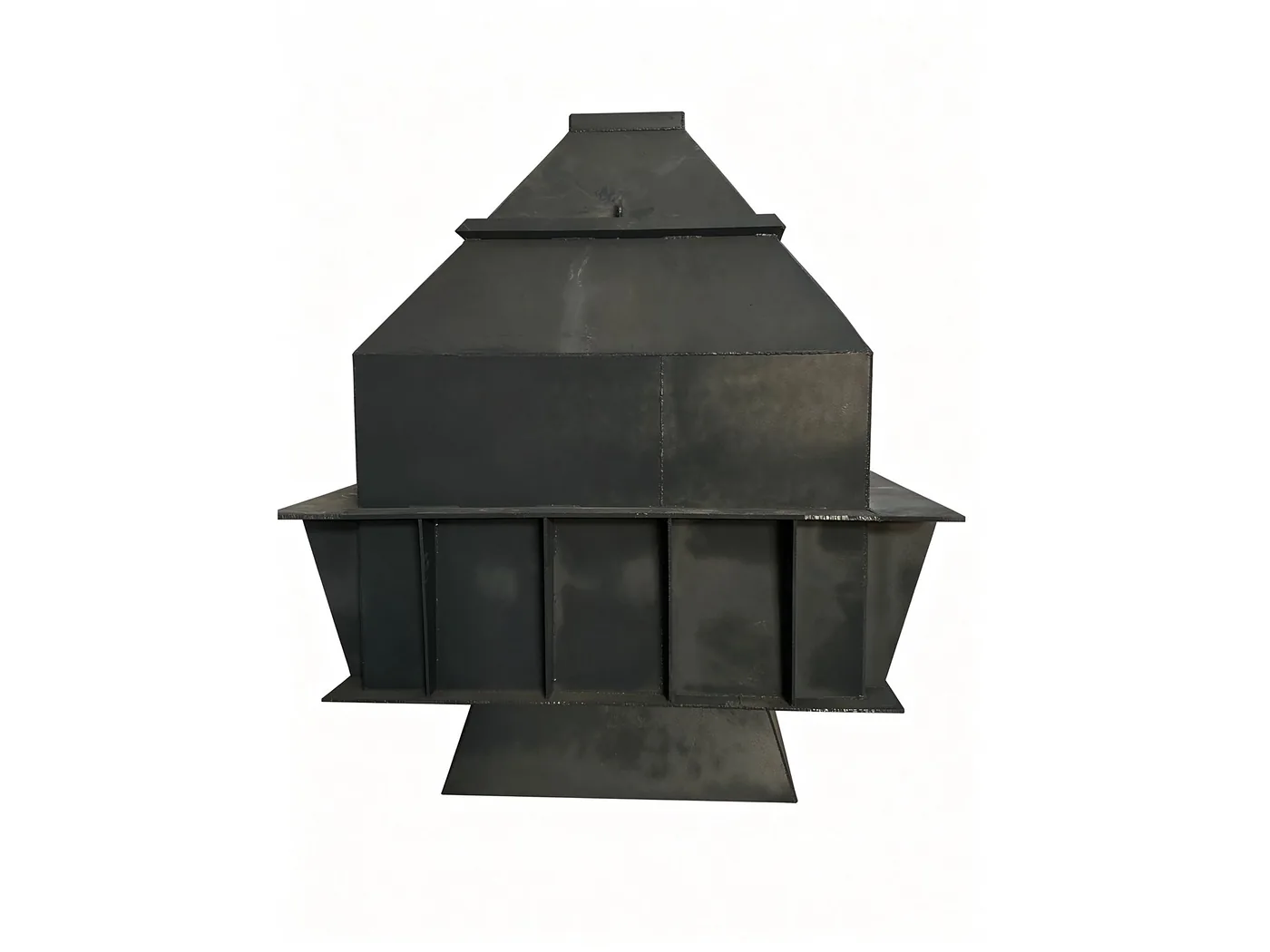
Hopper module: square-to-cone transition, stiffened and shipped separately.
What this page can and cannot state
Buyers deserve to know which numbers we have verified and which we have not. For this project:
| Item | Status on this page |
|---|---|
| Our supply scope | Confirmed by project records |
| Shell segmentation and hopper angle range | Confirmed by workshop and site photographs |
| Online pulse cleaning, differential-pressure trigger | Confirmed by design and product documentation |
| Air volume, filter area, fan power | Not published — sized per contract technical annex |
| Inlet concentration, gas temperature, emission limit | Not published — acceptance against contract values |
| Client name and plant name | Withheld at client request |
If you need the sizing basis for a similar duty, we will share it under NDA once you confirm the process data. We do not publish capacity figures to make a page look complete.
How we verify the project
Verification happens at three points, not at the end:
- In the workshop. Shell modules are trial-fitted, and the electrical I/O list is point-tested before dispatch.
- During erection. Flange joints, gasket compression, damper stroke and actuator limits are checked item by item against the inspection plan.
- At start-up. Cleaning sequence, differential-pressure response and damper modulation are proved against the control philosophy, then recorded.
The records stay with the project file. They are available to the buyer and to the third-party inspector, not published as marketing claims.
Questions buyers ask
Can one baghouse really serve three furnaces? Yes, when the stations do not peak at the same second and the duct layout gives each capture point enough suction. The engineering work is in the duct balance and the capture hoods, not in making the baghouse larger.
What happens when one furnace is down? Each branch has a damper. The operator closes the idle branch, and the remaining branches keep their design suction. The cleaning sequence follows the differential pressure, so it does not over-pulse a lightly loaded unit.
Do we have to stop production to change bags? No. Cleaning runs online, and we design bag replacement around a quick-release venturi and a cage of the same length, so bags come out from the clean-air side without tools.
Can you match our existing spare parts? Yes. Send the old bag, cage or valve photographs with the OEM number, and we will confirm the match before quoting. This is the same approach we use for pulse-jet baghouses already in service.
What we would need from your side
For a comparable foundry project, the input list is short but specific:
- furnace type, capacity and number of capture points;
- melting schedule and simultaneous operation pattern;
- dust or fume source, expected concentration and gas temperature;
- target emission limit and the test method named in the permit;
- site constraints: crane access, foundation, duct routing, plant air.
Send these and we will reply with a preliminary layout, a scope split and the document list your team needs to prepare. If the data is incomplete, we say which item is missing instead of guessing.
Related reading: steel manufacturing solutions, steelmaking auxiliary equipment, and shipping steel plant equipment in knock-down condition.