How It Works
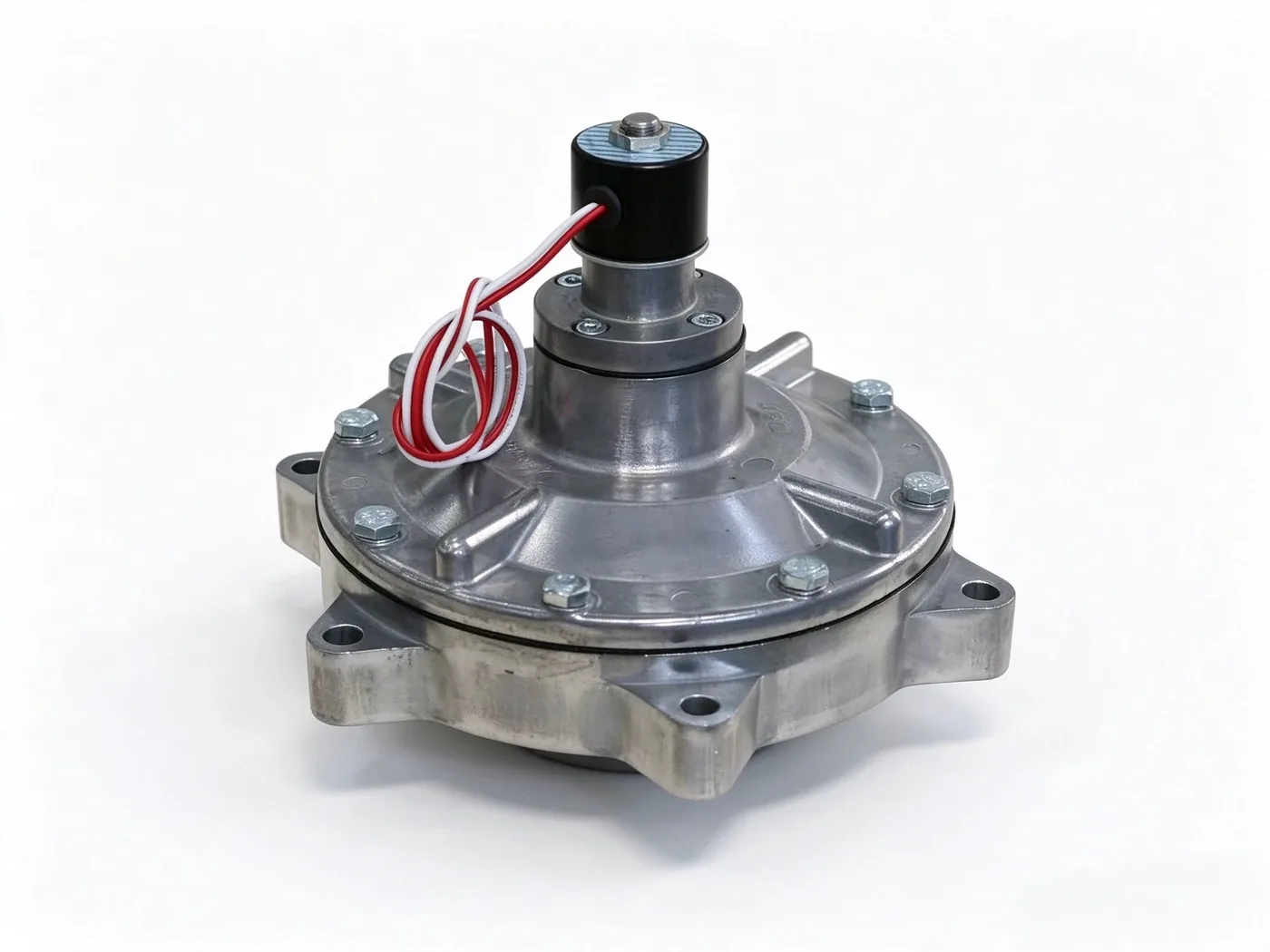
A pulse valve is the trigger of every cleaning cycle. It sits on the compressed-air header and feeds one blow pipe. When the PLC closes the circuit, the coil lifts the pilot diaphragm; header air then snaps the main diaphragm open for a few tens of milliseconds, and the jet travels down the blow pipe into the bags. The diaphragm closes, the header recharges, and the next tank waits for its turn.
What It Does in the Cleaning Cycle
- Stored air, not continuous air. Each pulse releases a short, high-flow jet from the header; the compressor only has to refill between pulses.
- Works with the lift valve. On offline cleaning, the compartment is cut off from the main airflow first, so the dust falls into the hopper instead of being re-entrained.
- Sets the rhythm with the PLC. Pulse interval and pulse width are programmed in the control cabinet; the valve only has to open cleanly and close completely.
- Shows its own failure. A leaking diaphragm appears as continuous blowing, rising air consumption, weak cleaning on one bag row and shortened bag life.
Body Types and Fit
| Body type | Mounting | Typical use | How we match it |
|---|---|---|---|
| Submerged (in-tank) | Valve body sits inside the compressed-air header | Compact headers, new build | Header drawing, or a photo of the header with a tape across the boss |
| Straight-through (remote) | Bolted to a manifold, connected by a short pipe | Retrofits and tight access | Photo of the old valve, plus the thread or the marking on the body |
One valve serves one blow pipe, so the valve count follows the pipe count, not the bag count.
We publish no size list on purpose: a valve is only right when it fits your header. Send the marking on the old body, the pipe diameter, or a photo with something for scale, and we match from that.
What We Supply
- Complete valves, submerged or straight-through body.
- Diaphragm kits, springs, coils, pilot assemblies and gaskets as separate wear parts.
- Valve groups assembled on a manifold, ready to bolt to the header.
- Diaphragm material chosen for your air quality, not for a catalogue page.
Wear Parts, Not Throwaway Units
The diaphragm and spring are the parts that wear. Moisture, oil carry-over and over-pressure shorten their life, so a clean regulated air supply is what keeps them working. Keep one spare diaphragm set per ten valves on site, and replace at the first sign of leakage instead of waiting for a fixed date.
How to Order
- A photo of the old valve, including the marking on the body.
- Body type you need: submerged or straight-through.
- Header working pressure and air quality.
- Quantity and required delivery date.
Send these and we confirm the match before quoting. Related reading: the pulse jet baghouse overview explains the full cleaning cycle, the control cabinet sets the pulse timing, and the pneumatic cylinder drives the offline lift valve. All replacement elements are grouped on the spare parts page.