Overview
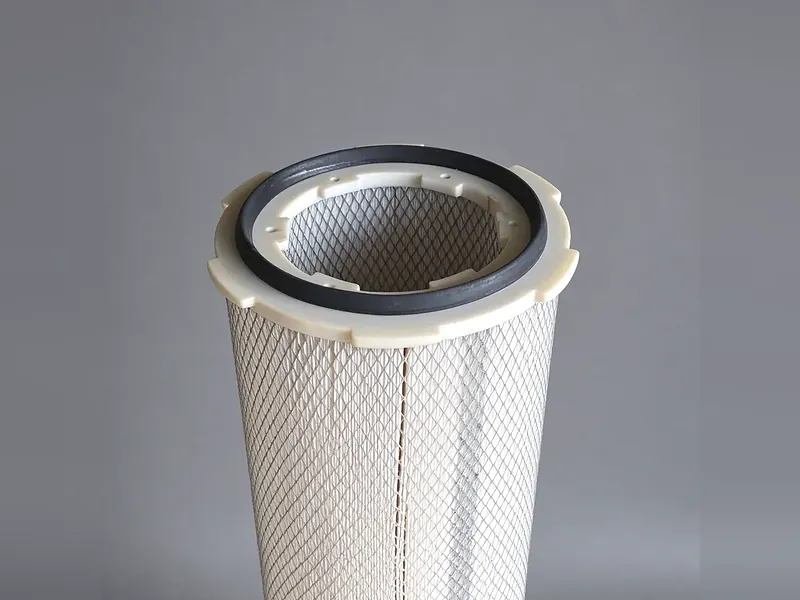
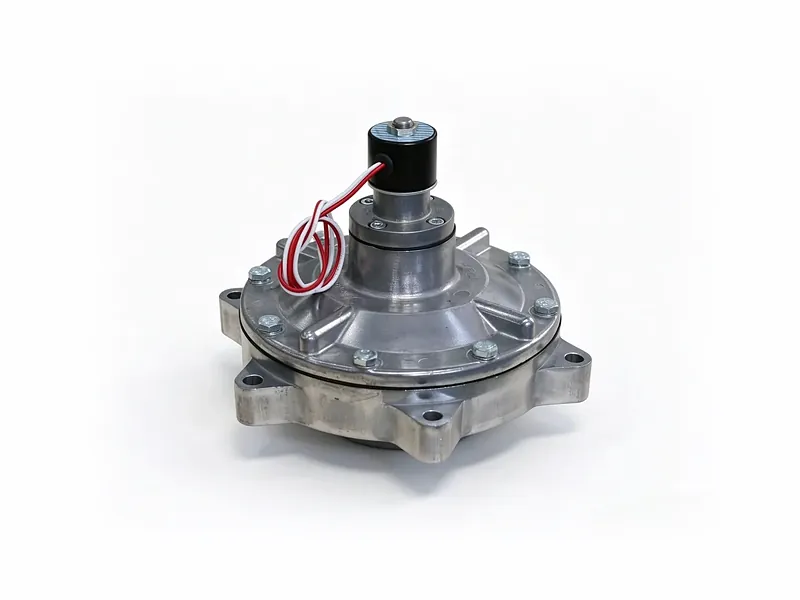
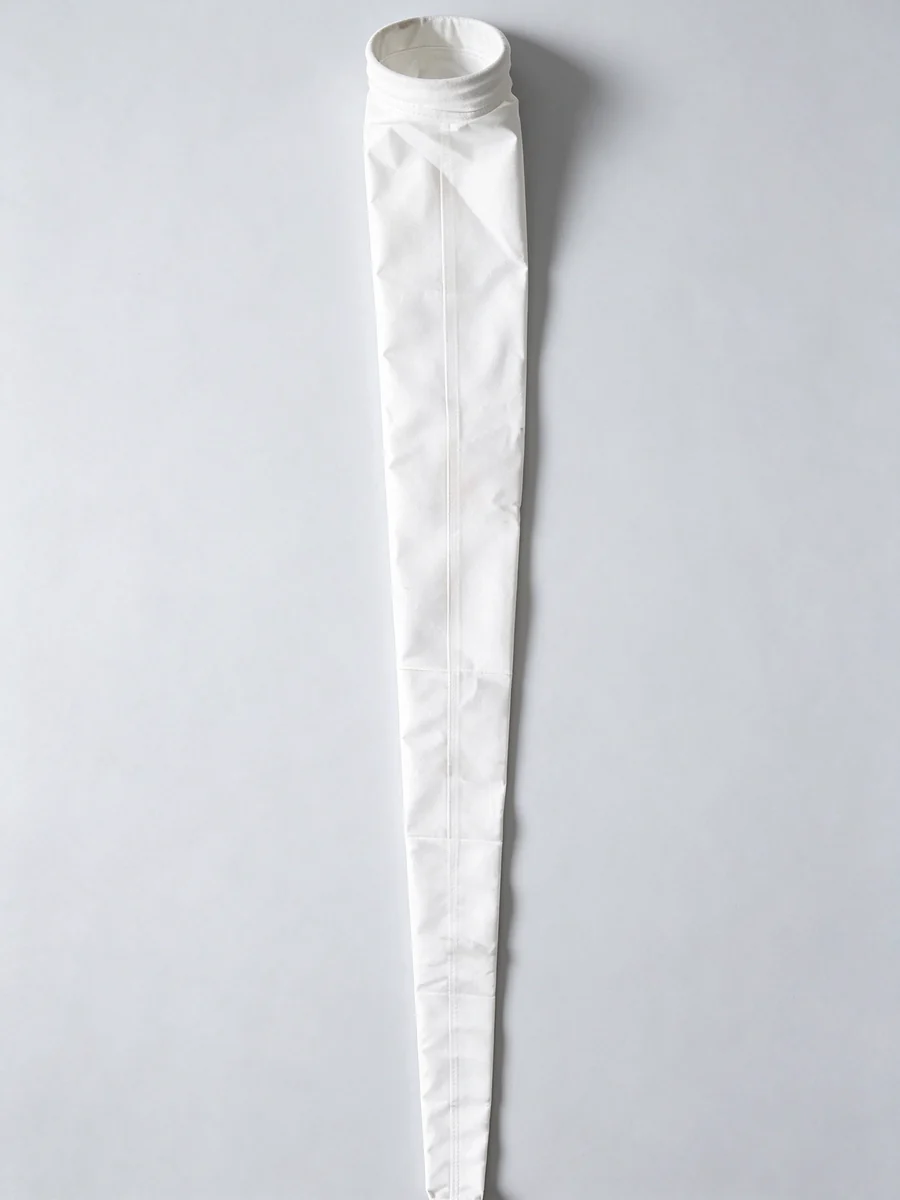
The filter bag is the consumable heart of a pulse jet baghouse. Dirty air passes through the bag from outside to inside; dust accumulates on the outer surface as a filter cake, and clean air exits through the top into the clean plenum. When pressure drop rises, compressed-air pulses shake the cake into the hopper.
What It Does
- Captures particulate from the air stream and keeps it out of the clean plenum and stack.
- Maintains stable filtration pressure between pulse cleaning cycles.
- Wears out over time from abrasion, humidity and temperature; scheduled replacement keeps emissions within target and prevents bag breakage during operation.
How It Sits in the Baghouse
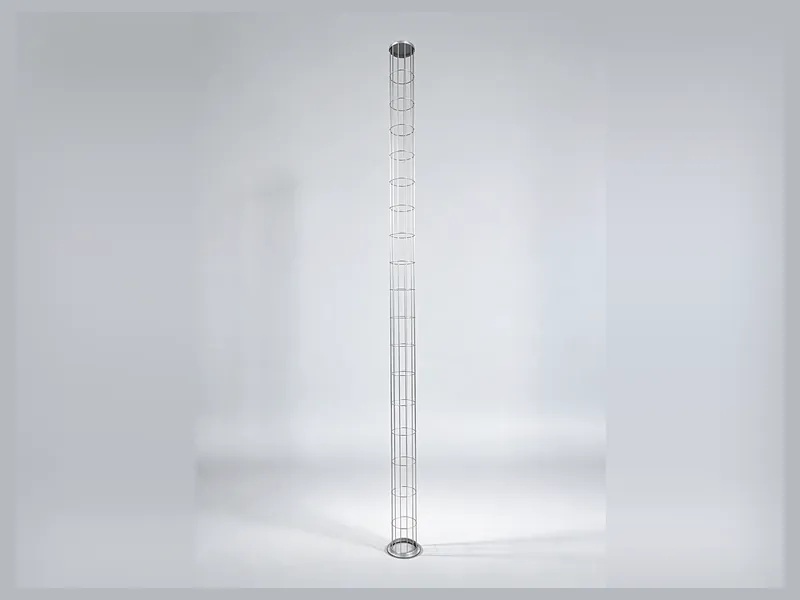
A bag hangs vertically from the tube plate, one per hole, with a cage of the same length inside it. The cage keeps the bag from collapsing inward when the pulse air stops and when the fan pulls; a bag without its cage will flatten within a few cycles. The cuff at the top is clamped or snapped into the tube plate, and that joint is what stops dirty air from bypassing the bag straight into the clean side.
The pulse itself is a mechanical event: a few tens of milliseconds of air snaps the bag outward, the cake cracks and falls, and the bag settles back onto the cage. A bag that is too long for its cage, or clamped off-centre, flexes at the same point every cycle — and that is where it tears.
Media Selection
| Media | Where it fits | Watch out for |
|---|---|---|
| Polyester (PET) | Dry dust at ambient temperature | Hydrolysis in damp or alkaline gas |
| PTFE membrane on polyester | Fine, hygroscopic or sticky dust | Membrane damage from sharp-edged dust |
| Aramid | Hot flue gas and foundry duty | Acid attack in sulphur-rich gas |
Weight, length, diameter and cuff style follow your existing bag. Nothing is picked from a catalogue: the old bag or the cage drawing is the specification, and we sew to it.
What We Supply
- Bags in polyester, PTFE membrane laminate and aramid, with anti-static and flame-retardant finishes where the risk assessment calls for them.
- Cuff and top finish matched to your tube plate and venturi style.
- Bag + cage sets, so media and support arrive with the same length.
- Compartment-sized batches for planned shutdowns, and single bags for emergencies.
How We Match Your Unit
Send one old bag, or these four numbers taken from it: diameter, length, cuff style and venturi presence. If no sample is available, a photo of the bag on the cage with a tape across the diameter is enough to start. Media grade is then chosen from your gas temperature and dust chemistry, and confirmed in writing before the order is released.
Media, size and construction are confirmed from your existing bag sample or equipment drawing. Send dimensions or a sample for a 24-hour quotation.