Overview
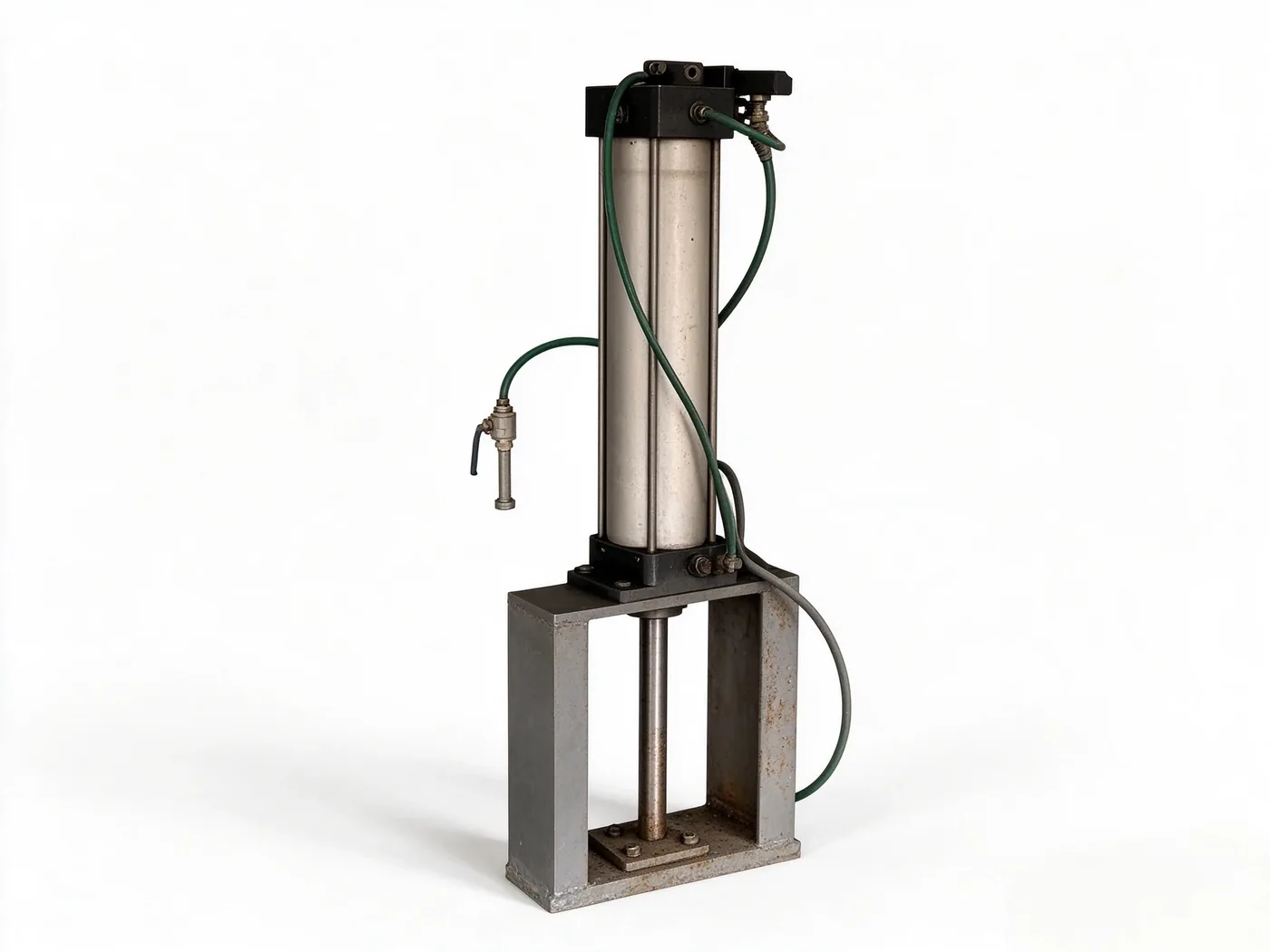
Pneumatic cylinders are critical actuators in dust collection and air pollution control systems, driving pulse valves, dampers, slide gates, and discharge equipment. Our specialized cylinders are built for the demanding conditions of industrial dust handling — with corrosion-resistant materials, durable seals, and custom mounting configurations to match specific equipment requirements.
All cylinders are tested for leak rate, cycle life, and thrust output before shipment, with full traceability of seal and barrel materials.
Duty in a Pulse-Jet Baghouse
The cylinder’s job in a baghouse is to isolate before the pulse. Air comes from the valve-group header; the PLC energises the solenoid, the piston moves and the offline lift valve closes the compartment off from the main duct. Only then does the pulse fire, so the dust that leaves the bags falls into the hopper instead of being carried straight back onto the neighbouring rows. Once the pulse is over, the cylinder returns and the compartment rejoins the airflow.
The same actuator also drives inlet dampers, diverter flaps and hopper discharge gates. It is mounted as a group on the valve manifold rather than one cylinder at a time, with the blow pipes and air supply sized together with the valves it serves.
Construction
| Component | Material / Spec |
|---|---|
| Barrel | Hard-anodized aluminum alloy (6063-T5) |
| Piston rod | 304 / 316 stainless steel, polished & chrome-plated option |
| End caps | Aluminum alloy, powder-coated |
| Seals | NBR (standard) / FKM Viton (high-temp) / PU (wear-resistant) |
| Piston | Aluminum with magnetic ring (optional) |
| Mounting | Foot, front/rear flange, double clevis, trunnion, tie-rod |
Key Features
- Corrosion resistance: Hard-anodized barrel and stainless steel rod withstand humid and mildly corrosive dust collector environments.
- Custom stroke & mounting: Bore and stroke are cut to the force and travel your valve needs, with any standard or custom mounting interface.
- Adjustable cushioning: Hydraulic-style cushioning at both stroke ends prevents impact damage during high-cycle valve operation.
- Position feedback: Magnetic piston option allows reed or Hall-effect sensors to confirm cylinder position for PLC interlocks.
- High-temperature option: FKM (Viton) seals and modified lubricants for hot-gas duct dampers where the standard seal would harden.
What We Supply
| Item | How it is settled |
|---|---|
| Bore and stroke | set by the force needed and the valve travel |
| Mounting | foot, flange, clevis or trunnion — matched to your bracket |
| Seals | NBR for ambient duty, FKM where the duct runs hot |
| Position feedback | magnetic piston option for PLC interlocks |
How We Match Your Unit
Send the valve or damper drawing, the force it must move, the air pressure available and the space around the bracket. We return the cylinder size and mounting that fits, and a replacement for the unit already in service if that is all you need.
No bore list is published on purpose: the right cylinder is the one that fits your valve, not the widest range on a catalogue page.