How It Works
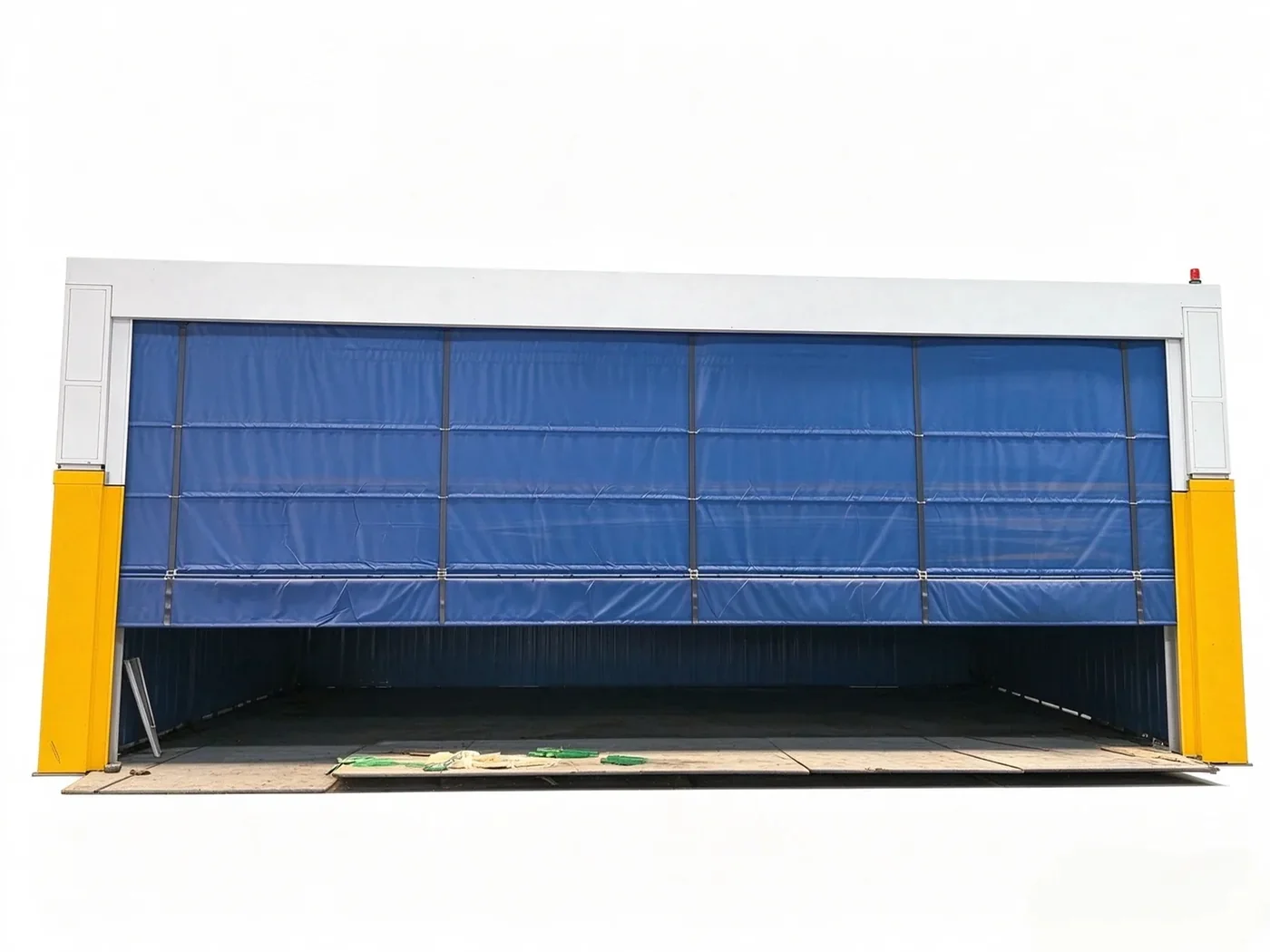
The booth is a movable enclosure, not a fixed room. A motor drives the soft curtain along rails until the working area is closed; extraction then holds that space under negative pressure, so dust from grinding, fettling or blasting is pulled into the plenum instead of drifting into the shop. When the job is done, the booth retracts and the floor is free again.
Where It Fits
- Foundries — fettling and cleaning of castings that are too large or too awkward for a fixed booth.
- Fabrication shops — long weld seams, bulky frames and oversize parts that cannot be moved to a dedicated cell.
- Blasting stations — batch work at a fixed position, where the enclosure moves rather than the part.
- Mixed workshops — one rail line shared by several workstations, so one collector serves the whole bay.
Layout Options
| Layout | How it works | Best for |
|---|---|---|
| Single telescopic booth | One curtain set over one station | One large workpiece at a time |
| Tandem stations | Two or more booths on a shared rail line | Several operators, one shared collector |
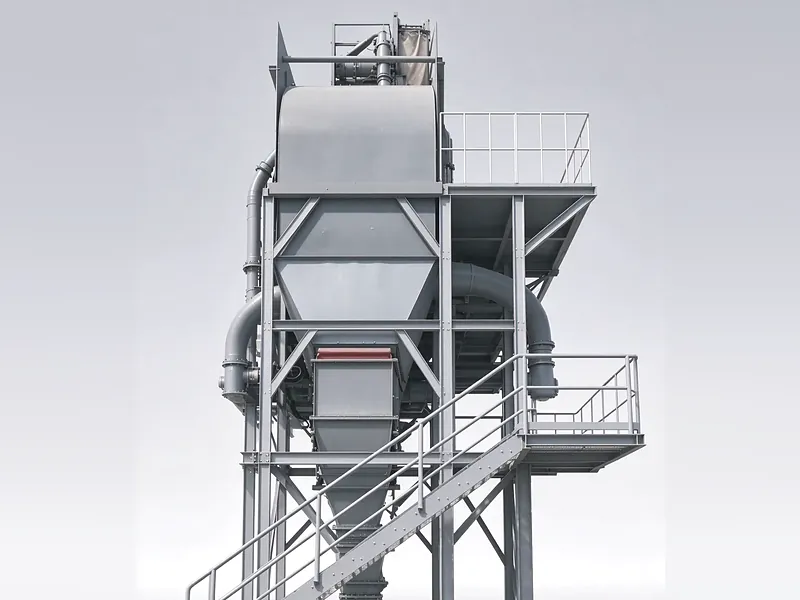
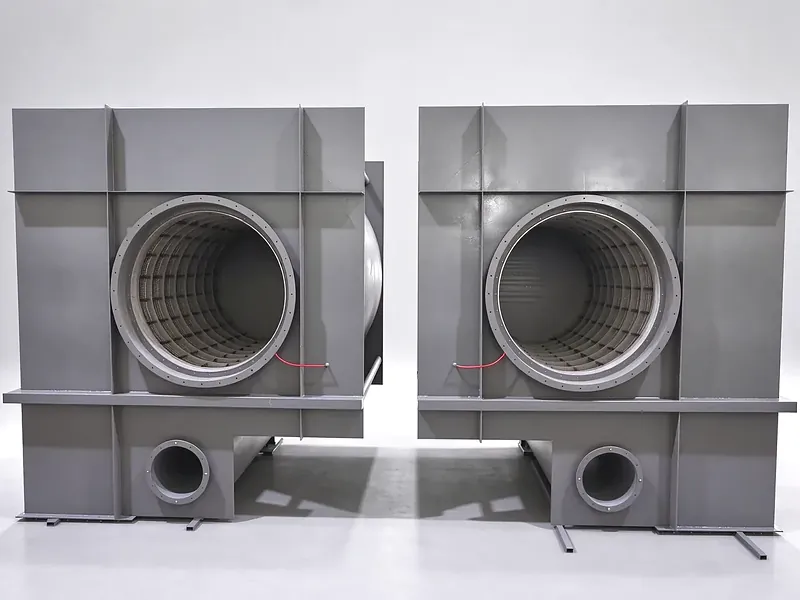
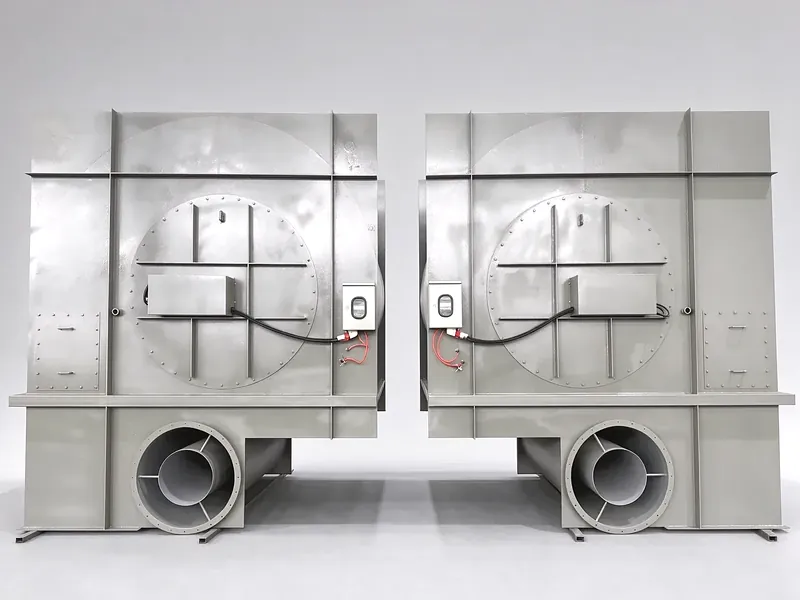
| Dedicated filter unit | Booth ducted to a cartridge collector beside it | Standalone cells with no central duct |
| Central connection | Booth ducted into the plant baghouse | Sites that already run central extraction |
Technical Specifications
| Parameter | Typical design range |
|---|---|
| Enclosure | Soft curtain on steel frame, rail-mounted |
| Drive | Electric, motorised extension |
| Extraction | Top or side plenum |
| Air volume | Matched to the station; confirmed on drawing |
| Filtration | Dedicated cartridge unit or central baghouse |
| Options | Lighting, service door, name board, tandem layout |
Booth dimensions follow the workpiece envelope. Travel stroke and curtain height are set from your part size and handling method, not from a catalogue.
What We Need From You
- Largest and smallest workpiece envelope.
- Number of stations and operators.
- Dust type — fettling sand, metal dust or blast media.
- Whether you already have a collector, or need a dedicated unit.
Send these and we return a layout sketch with the airflow figures for review. If the dust point is small and fixed, a telescopic extraction arm is usually the cheaper answer; if the part is large and the dust is heavy, the booth is the better fit. Both can discharge into a pulse jet baghouse or a dedicated cartridge unit, and both belong to the dust collection systems range.
Typical design ranges; final data confirmed at quotation.