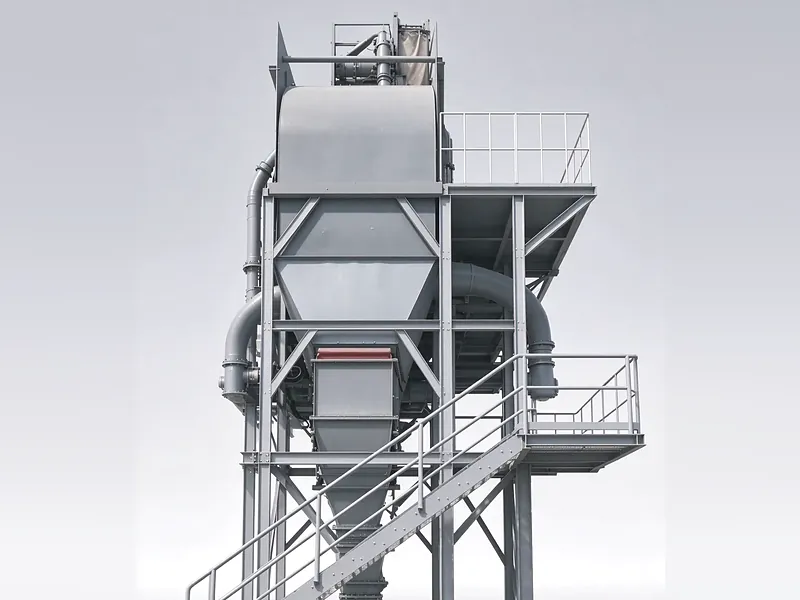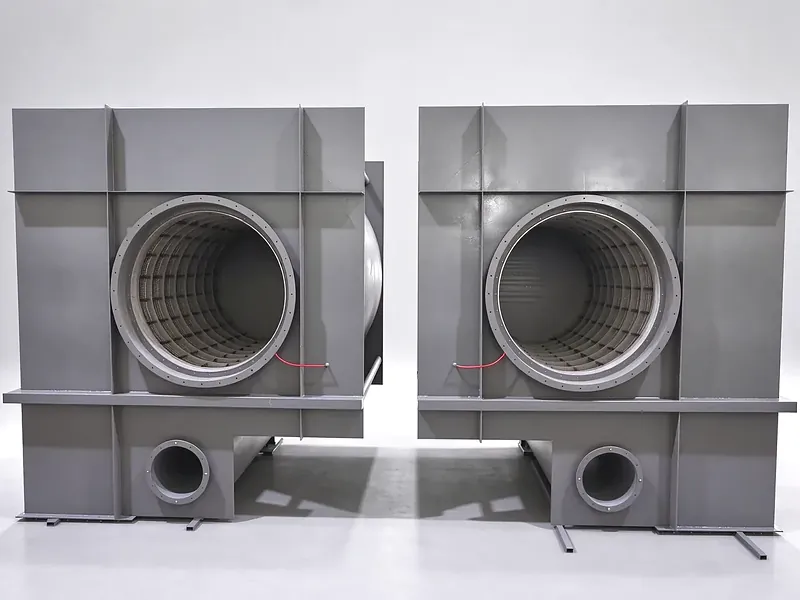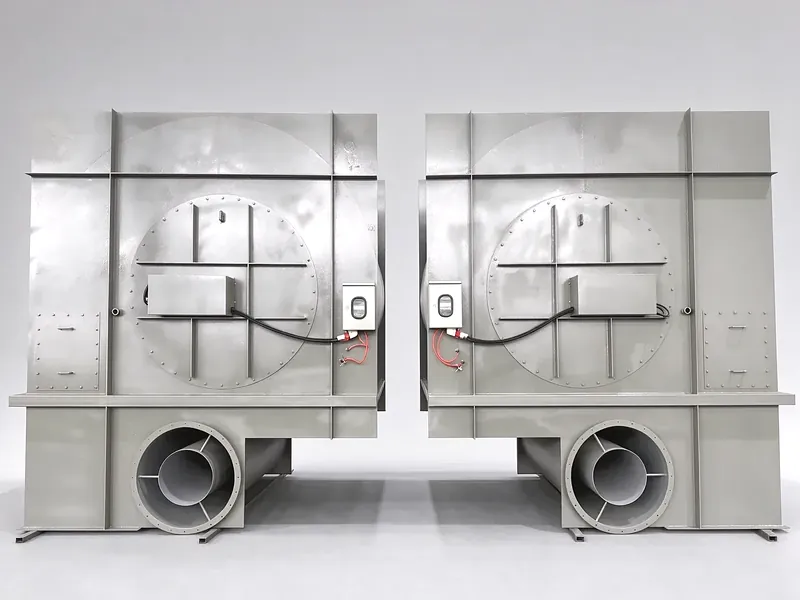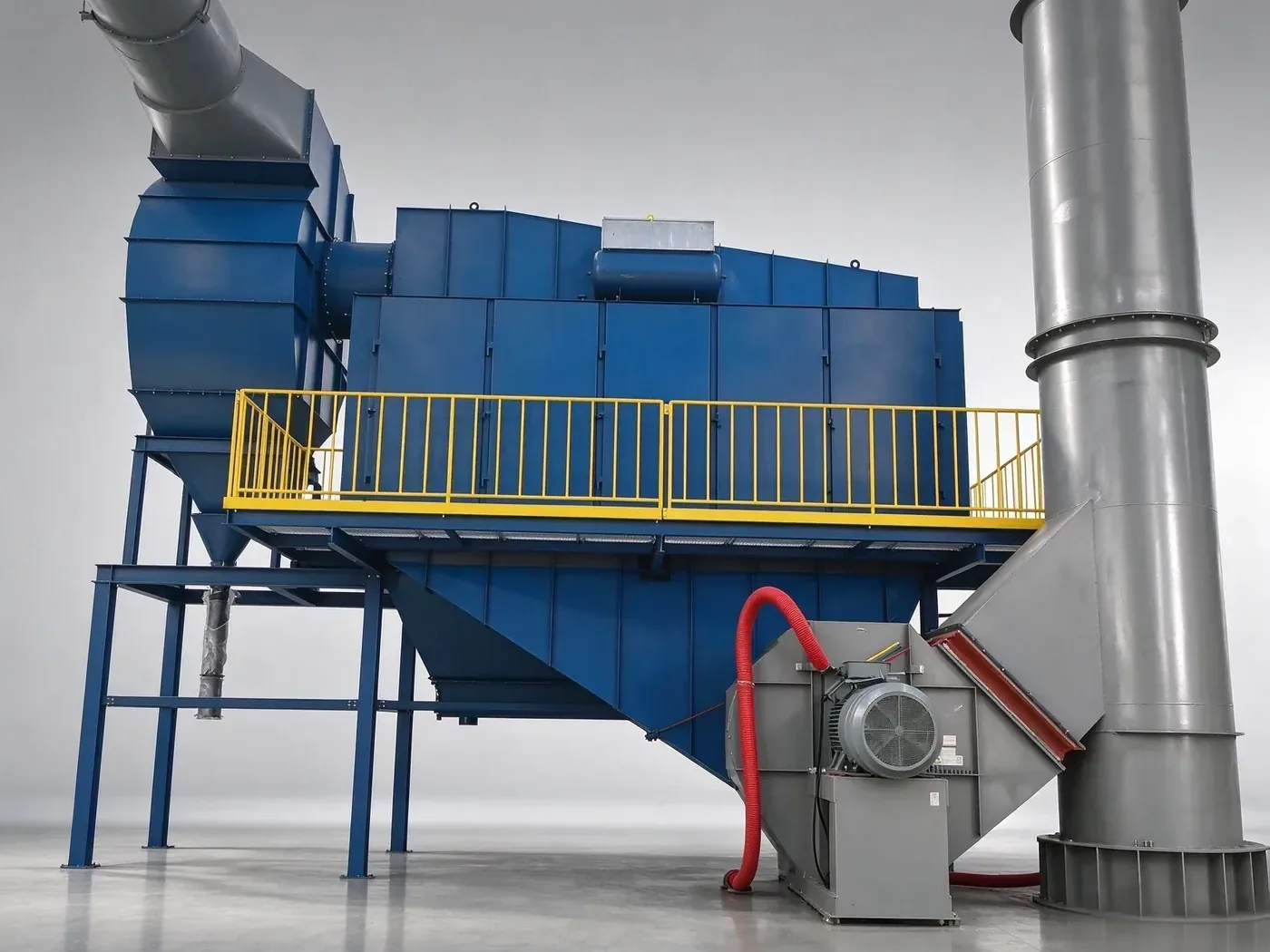
What This Model Is
PPC-57000 is the mid-range platform: a wider housing with twin access points, chosen when several hoods feed one collector and the dust load varies across the shift. It is common in mining, mineral processing and bulk handling.
The number in the model name is a family reference, not a rated capacity. Housings, hoppers and pulse systems are built from the same platform, then sized to the airflow your hood network actually needs. We publish no airflow figure here because the figure only means something once the process is known: capture points, dust load, temperature, duty hours and the emission limit in your permit.
How We Size It
- You send the process: capture points, duct route, dust type, gas temperature and shift pattern.
- We calculate the airflow from the capture requirement, then the filter area from the air-to-cloth ratio that suits your dust.
- Fan static pressure follows the duct and filter resistance; fan power follows flow and pressure.
- The result is issued as a drawing with the housing, hopper and platform fixed before fabrication.
Nothing on this page is a promise of capacity. The promise is the drawing you approve.
Compliance and Verification
- Emission: designed to the particulate limit in your operating permit, not to a generic claim.
- Mechanical: housing, hopper and platform checked against wind and snow load for the site.
- Acceptance: third-party stack testing arranged on request after commissioning, with the report issued against the permit limit.
Questions This Page Should Answer
- Can you supply this size without a long lead time? The platform is standard; only the filter area and fan change, so fabrication starts from a known drawing set.
- What if my airflow turns out different? That is the normal case. The number is recalculated before fabrication, not after.
- Can it run outdoors? Yes, with a weatherized enclosure and heated pulse cabinet where the site needs it.
Related: the pulse jet baghouse overview explains the cleaning cycle, the control cabinet sets the pulse timing, and the system anatomy shows where each part sits.